Week of April 22-26
Week of April 22-26
"Play feels like sunshine!"- Andie age 6
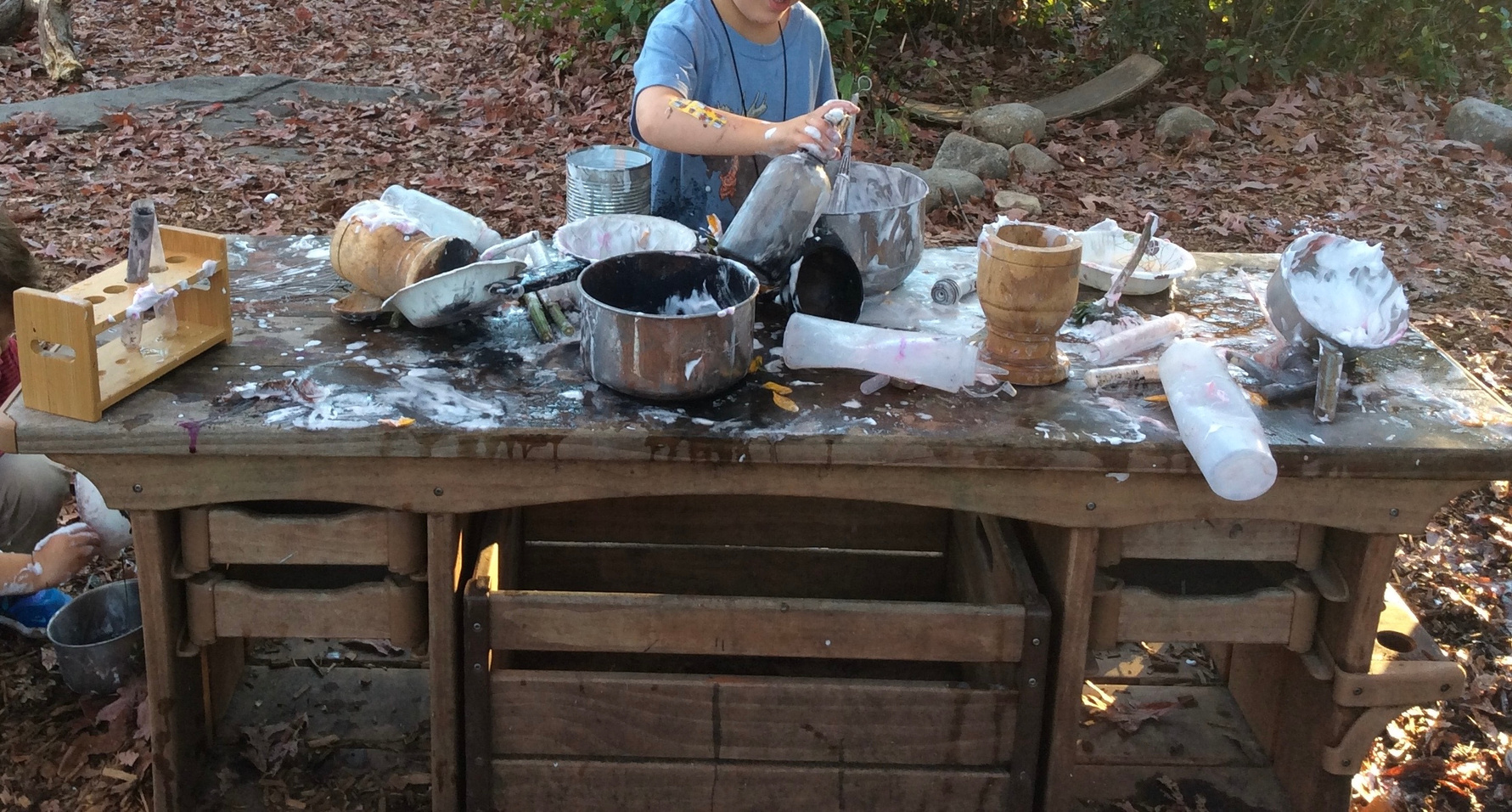
Join us in Implementing a Spring Play Day and Bring Unstructured Play to your School
during the Week of April 22-26
be the change!
https://www.change.org/preserveplay
Join us in Implementing a Spring Play Day and Bring Unstructured Play to your School
during the Week of April 22-26
be the change!
https://www.change.org/preserveplay
A Letter to Teachers & Administrators
A Letter to Teachers & Administrators
Dear [Teacher/Administrator's Name],
We hope this message finds you well! We are a group of passionate educators who, through our graduate coursework, are reaching out to share an initiative that holds the potential to significantly enrich our schools and positively impact our students' development. This initiative supports Global School Play Day, a movement dedicated to reinstating the vital role of play in the learning and growth of our students.
In recent years, we have observed a concerning decline in the amount of play in early childhood settings. This trend not only diminishes the joy and spontaneity of childhood but also overlooks the profound benefits that play offers in developing critical thinking, creativity, and social skills among children. Recognizing this, a group of dedicated educators, including Scott and Tim Bedley, Eric Saibel, Oliver Schinkten, Misty Higgins, and Bethany Chaffin, initiated the Global School Play Day in 2015. Their mission was clear: to spread awareness and advocate for the indispensable role of play in education.
In support of the Global School Play Day initiative, we invite you, our esteemed educators and administrators, to dedicate at least one hour this spring to unstructured play in your classrooms and schools during the week of April 22-26. This simple yet profound act not only aligns with a worldwide movement but also enhances our students’ educational experience. By embracing a Spring Play Day, you provide students the freedom to explore, imagine, and engage in activities of their choosing, fostering creativity, collaboration, and a deep love for learning. Let’s unite as a community to advocate for the essential role of play in education and make a significant impact together. Join us in this vital initiative—commit to instituting an hour of play and witness the invaluable benefits it brings to our students.
Implementing at least an hour of unstructured play in your context can be as simple or as elaborate as you choose. Whether it involves outdoor activities, creative arts, or imaginative play, the key is to allow the students the freedom to explore and engage in play that is student-led. We believe that by participating in the Spring Play Day, we can make a significant difference in the lives of our students. We invite you to join us in this endeavor, to bring the joy and benefits of play into our classrooms, and to stand as advocates for a more playful, creative, and enriching education.
Do you believe in our movement? If YES, please help us to advocate and sign our petition for more play by clicking here! Also, be sure to look over the Teacher and Student Reflection Tools before the big day to get an idea of what to look for in your classrooms. We ask that teachers share their reflections afterward to help us understand how this movement impacted students around the world.
Thank you for considering this initiative. We are excited about the possibility of working together to bring a meaningful change to our educational practices and to our students’ lives. Should you have any questions or require further information, please do not hesitate to reach out.
Warmest regards,
Krista Polo
Venuse Yeates
Christina Massey
Keri Sackey
Graduate Teachers in the Boulder Journey School Teacher Education Program
Contact Information: kristapolo14@gmail.com, clmassey16@gmail.com, venuseyeates@gmail.com, kerisackey@gmail.com

SPRING PLAY DAY TEACHER REFLECTION TOOL
SPRING PLAY DAY TEACHER REFLECTION TOOL

How did your students feel before you implemented the play day?
_________________
_________________
__________________
__________________
How long did your
students play?
ALL DAY LONG!
More than an hour
One hour or less

What was the best noticeable outcome from your play day implementation?
_______________________
_______________________
________________________
_________________________
How did your students feel after you implemented the play day?
_____________________
_____________________
_____________________
_____________________
What is one word you would use to describe this day?
_______________________
_______________________
_______________________
_______________________
What is one thing that you would do differently next time?
_______________________
_______________________
_______________________
_______________________
Do you feel as though you had parent support for this play day?
________________________
_________________________
_________________________
__________________________
__________________________
Would you do this again given the opportunity?
__________________________
__________________________
__________________________
__________________________
__________________________
SPRING PLAY DAY STUDENT REFLECTION TOOL
SPRING PLAY DAY STUDENT REFLECTION TOOL
I tried...
_________________
__________________
__________________
I used...
________________
________________
_________________
I felt...
_________________
_________________
_________________
I wondered...
_________________
_________________
_________________

SUGGESTED GUIDELINES FOR PLAY


What should play look like?
Anything that you and your students want! It can be outdoors or indoors and should give children the opportunity for open-ended play where they have agency and choice.

“It means like playing with toys, playing with play-dough. Playing with 4-leaf clovers!” -Kojo, age 3

Teachers to Students
Teachers to Students

- Ensure the safety of all children.
- Treat all materials and the environment with respect and care.
- Return all items to their proper places after use.
- Focus on interactive and imaginative play.
- All classroom agreements apply.
Students to Teachers
Students to Teachers
- Play should be inclusive.
- Embrace the joy and fun.
- Allow children the freedom of choice.
- Assist in preparing the play area with inviting spaces and materials.
- Provide access to classroom materials, toys, and games for our play.
Students to Students
Students to Students
- Show good sportsmanship and grace in both winning and losing.
- Respect one another ensuring each child has a voice in play.
- Handle toys and materials with care to avoid damage or loss.
- Respect the creations and play activities of others.
- Celebrate and respect everyone's choice without judgment.
- Practice kindness and treat others the way you wish to be treated.
- Have fun!

These guidelines aim to foster a positive, inclusive, and respectful play environment for everyone involved!

INTELLIGENT MATERIALS TO GUIDE TEACHERS TO UNCOVER THE HUNDRED LANGUAGES
INTELLIGENT MATERIALS TO GUIDE TEACHERS TO UNCOVER THE HUNDRED LANGUAGES

Art
Art
Crayons, markers, colored pencils, white paper, colored paper, pencils, pens, paint, play-dough, clay, wire, scissors, hole-puncher, glue, tape, string, water, watercolor, feathers, rubber bands, dot markers, chalk, glitter, paintbrush, stamps, ink, rollers, popsicle sticks
Science
Science
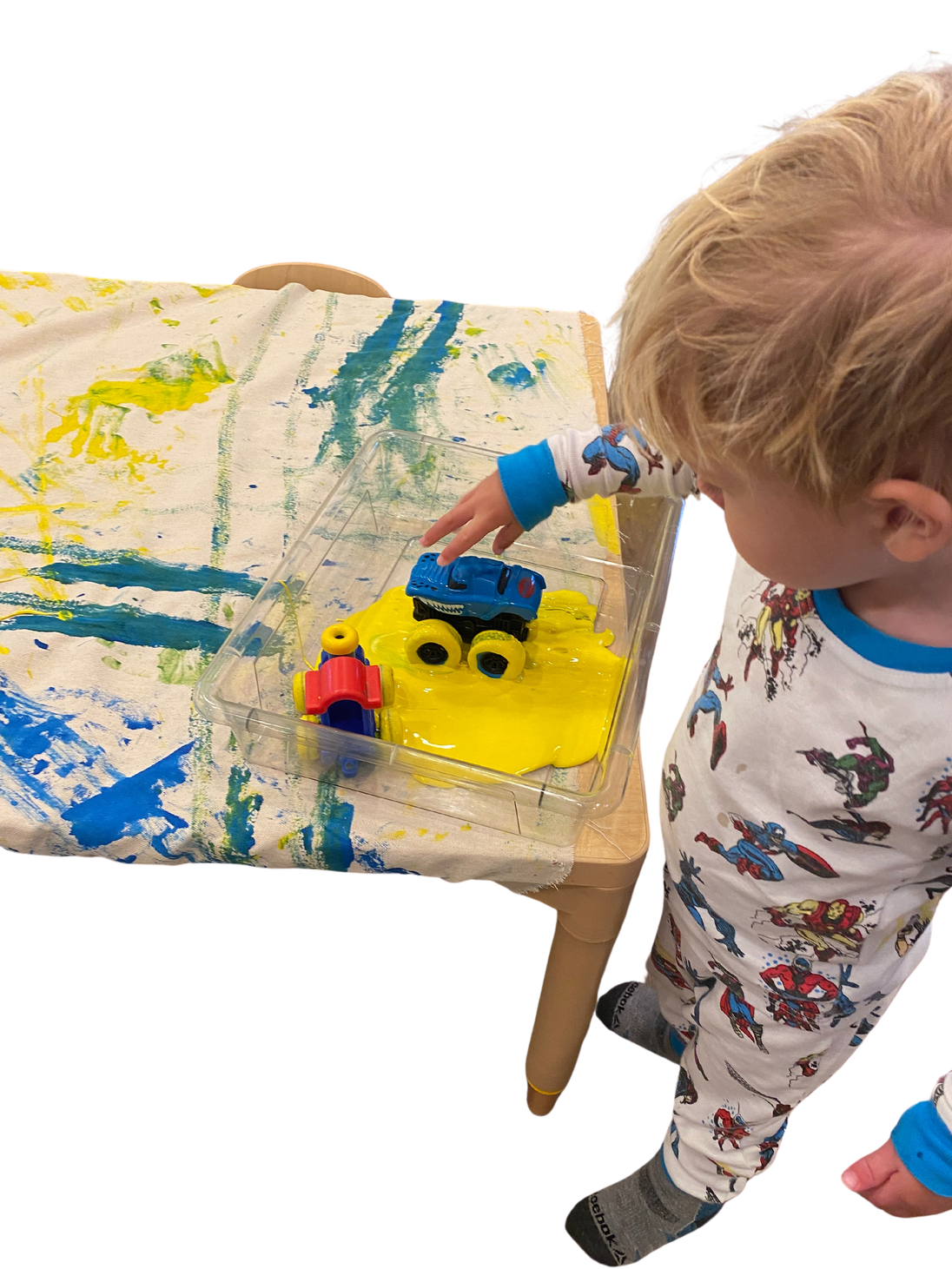
Water, containers/vessels, sand, magnifying glasses, microscopes, specimen jars, natural materials, clipboards, notebooks, pencils, reference photographs, non-fiction books, seashells, popsicle sticks, corks, cotton balls, feathers, magnets, cameras, stacking rocks, gears, puzzles, cardboard tubes, Q-tips, paper towels, hammer, safety goggles, rulers, measuring cups, nuts, and bolts
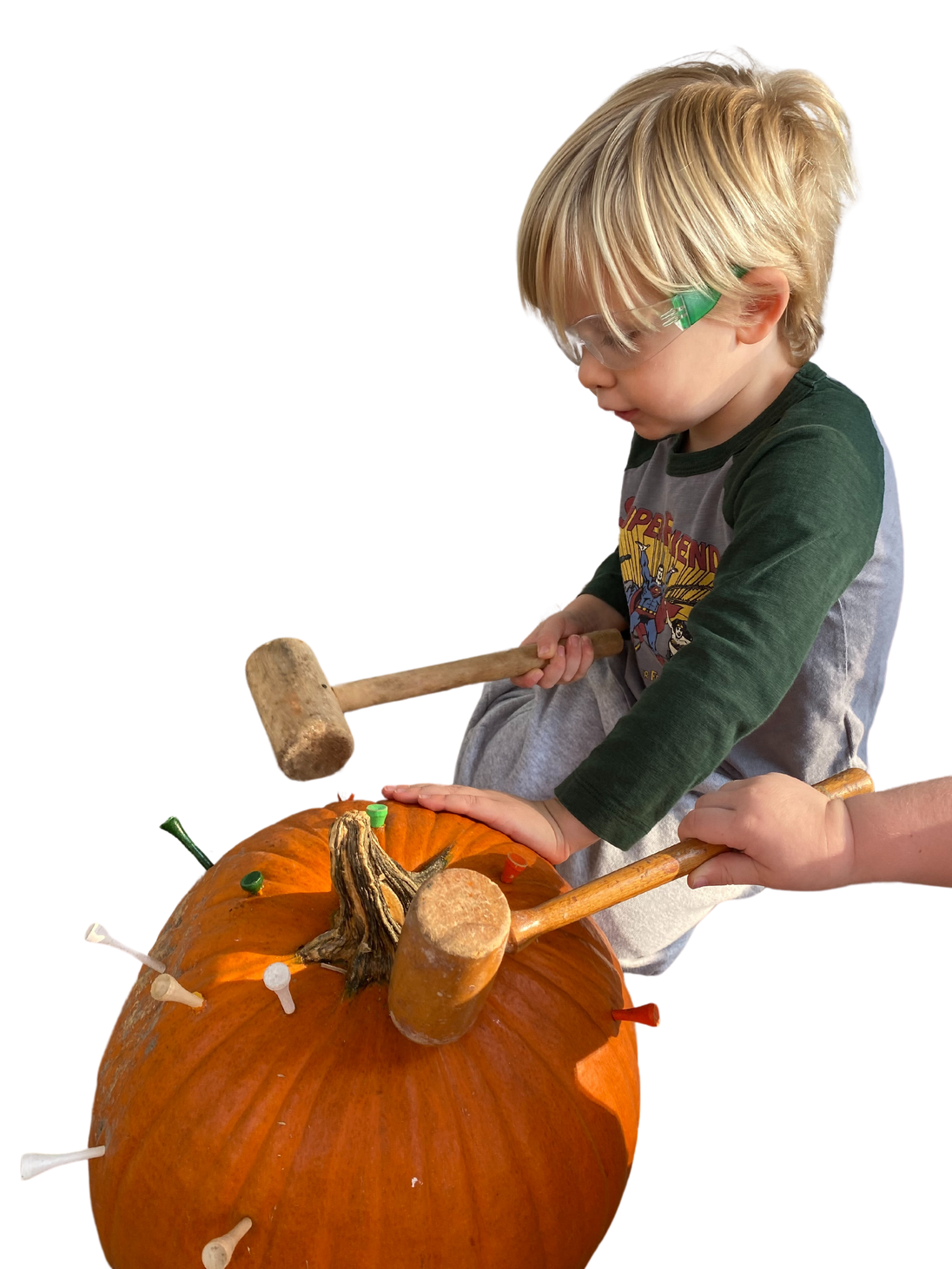
MATH
Marbles, flat marbles, beads, bowls, buttons, natural materials, string, rulers, magnet numbers, clipboards, notebooks, wooden rings of different sizes, building blocks, popsicle sticks, dice, cards, cardboard tubes, wood cookies, sensory materials, Magna-tiles, rubber bands, peg boards, dot markers, egg cartons
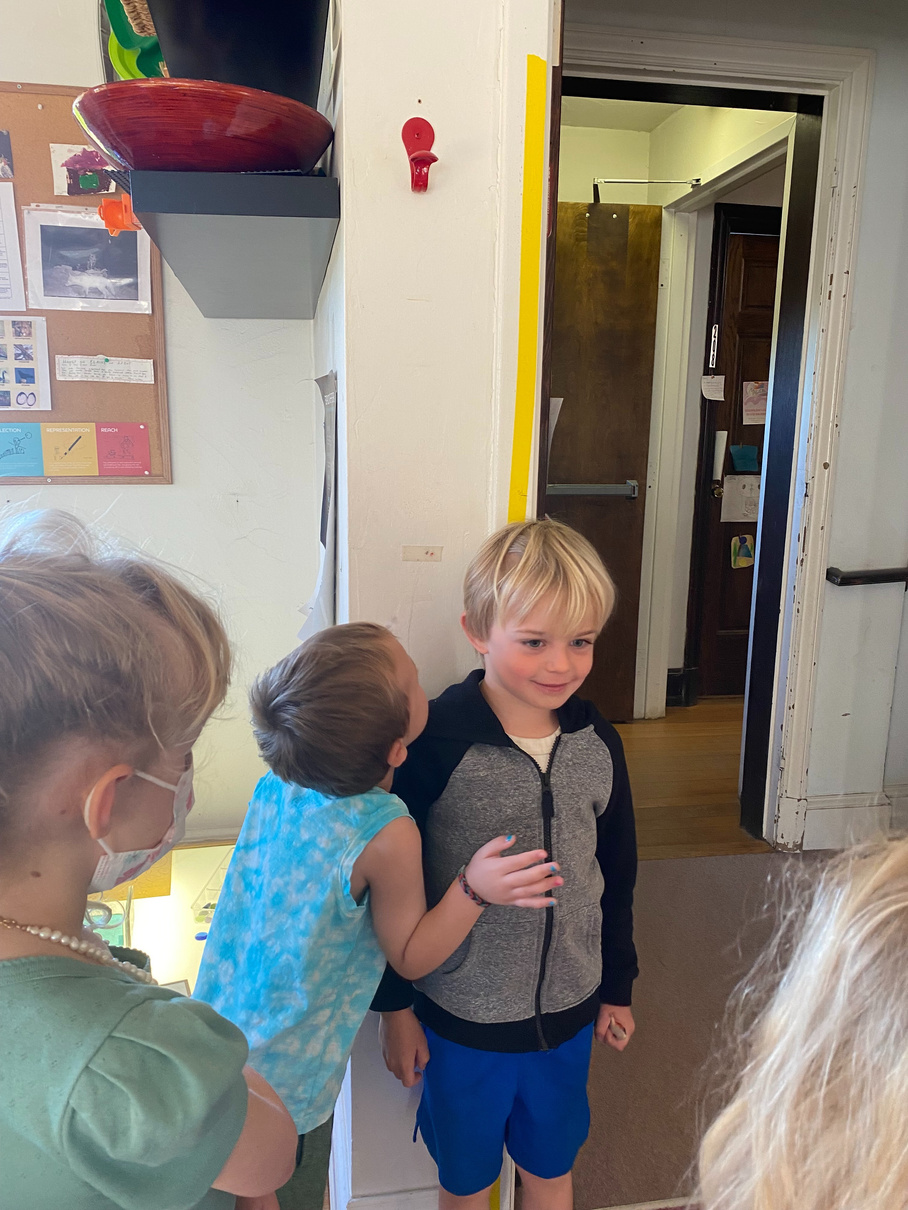
Literacy
Wooden letters, magnet letters, mark-making materials, paper, books, posters, picture cards, play-dough, clay, magnet/felt storyboards, dry-erase boards with markers, natural materials, sensory materials, sand trays
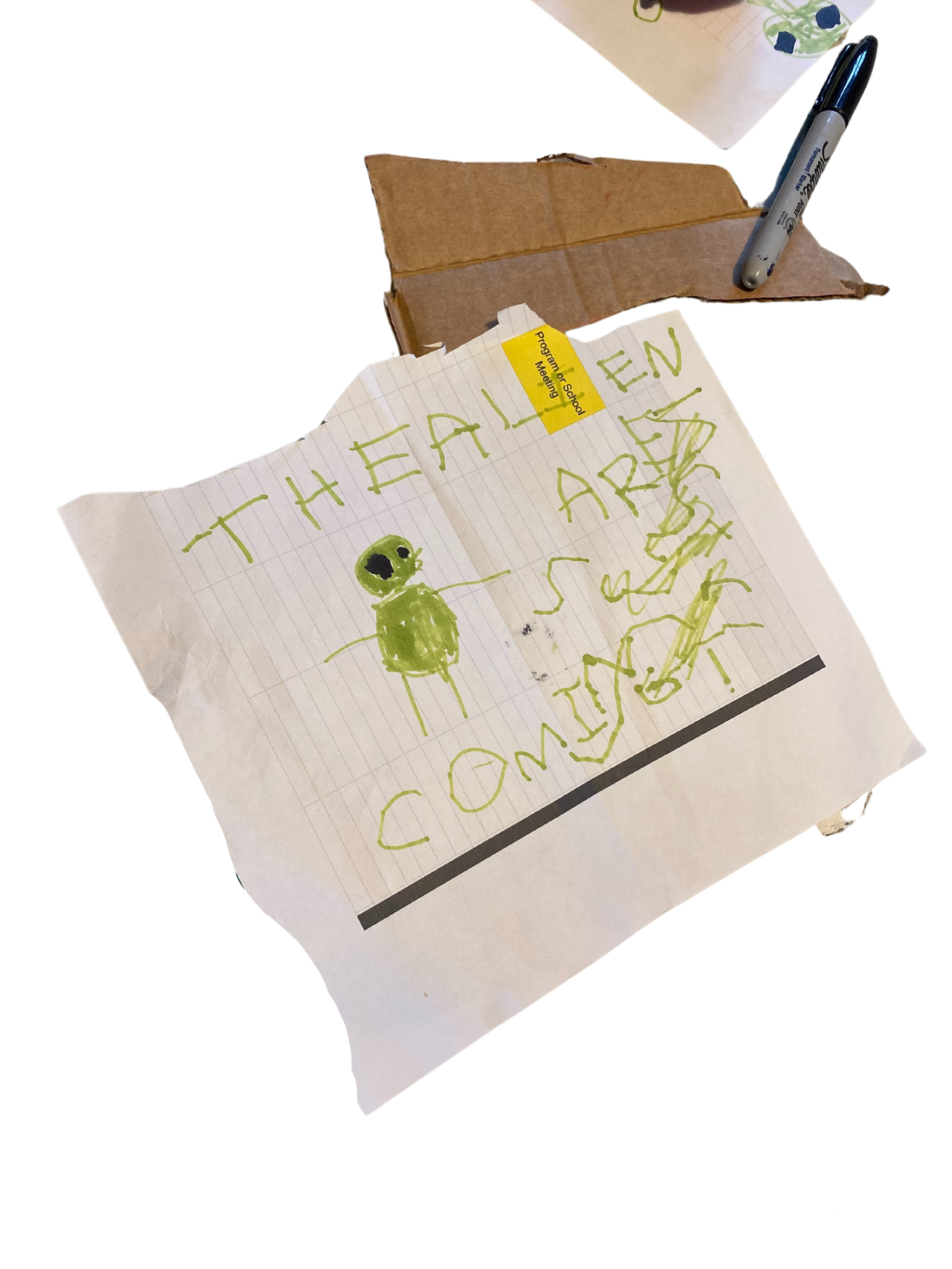
sensory
Rice, dried beans, dried chickpeas, dried corn, popcorn, sand, kinetic sand, playdough, clay, buttons, pompoms, shaving cream, ice, water, mud, sea salt, JELL-O, soap, snow, flat marbles, water beads, shovels, scoops, spoons, funnels, cardboard tubes, egg cartons, tapioca beads
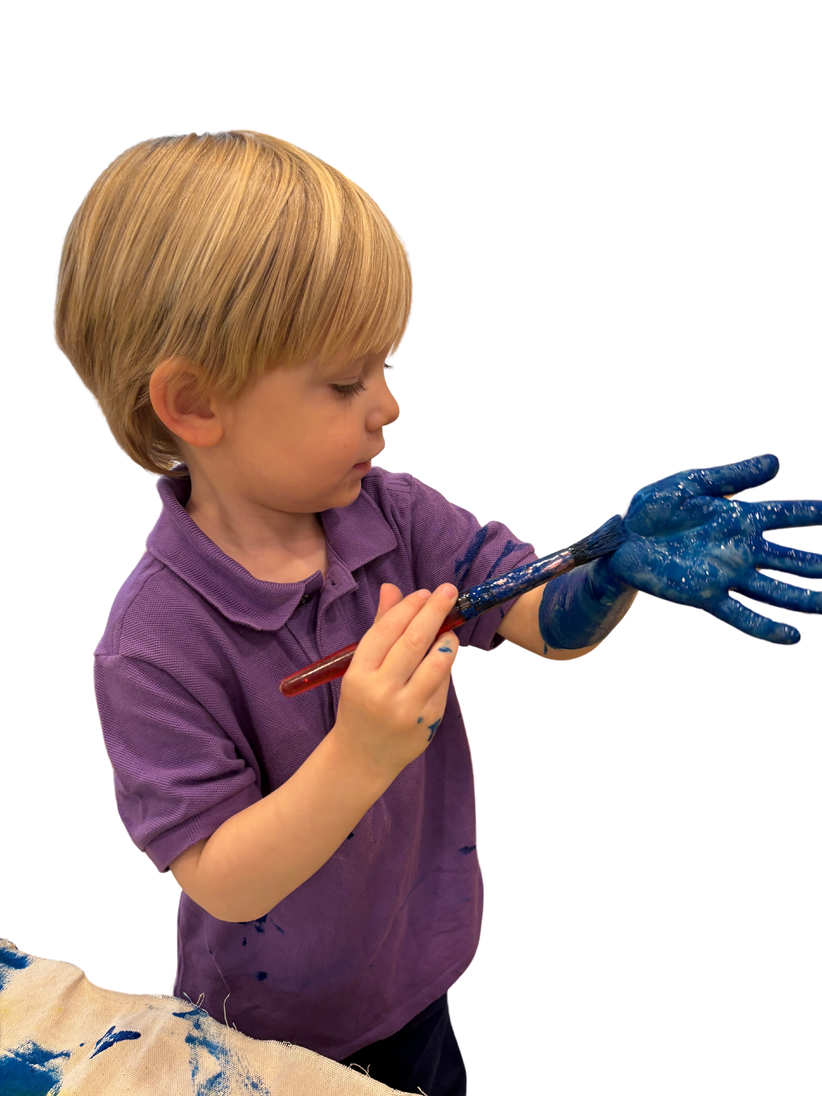
natural
Sticks, rocks, pebbles, pinecones, gumballs, magnolia cones, leaves, flowers, old nests, acorns, seed pods, crystals, seashells, bark, dirt, mud, grass, fossils, cotton, wool, feathers, dehydrated fruits, dried herbs, straw, bamboo, driftwood, wood chips, peach pits, moss, tree cookies, sand, clay, snow, rain
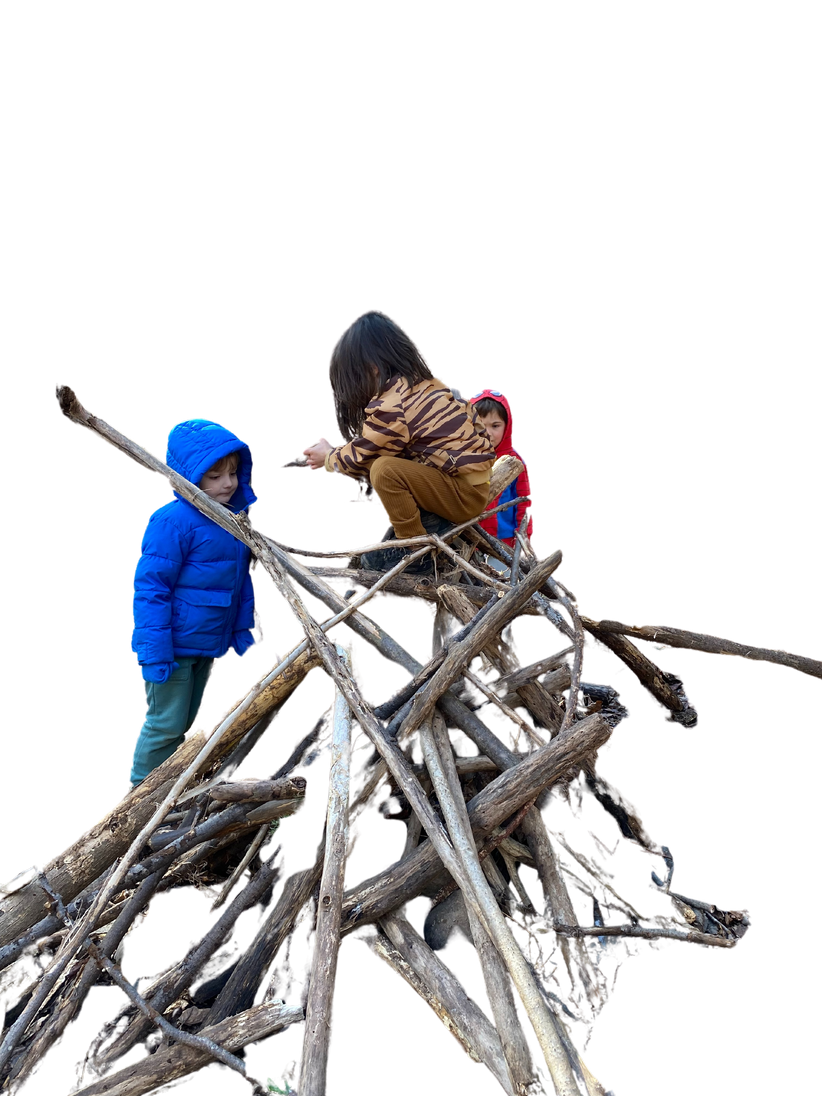
Dance, movenment, music
Dance, movenment, music
Scarves, flashlights for shadows, musical instruments, bells, projector, camera, radio, CD player, CDs, MP3s, speakers, microphone, carpet squares, headphones, wooden sticks, yoga mats, yoga cards, balance beam, curtains
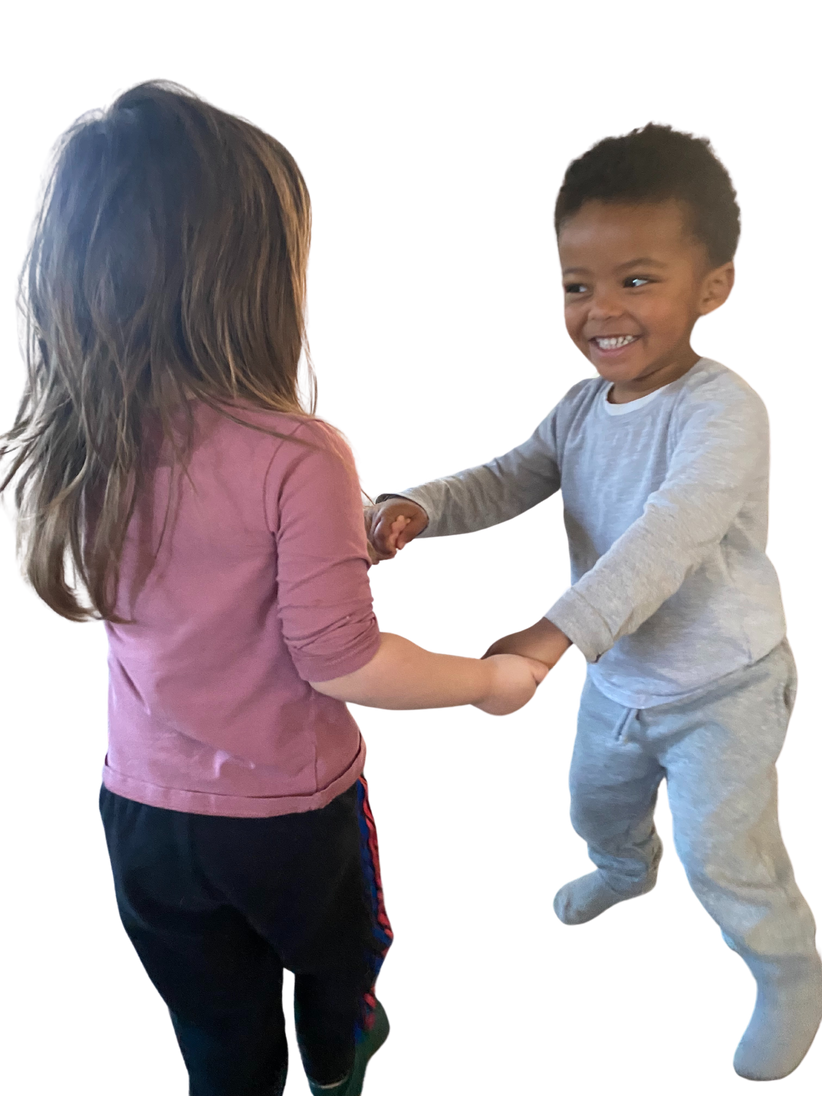
physical activity
physical activity
Pillows, blankets, large blocks, trees, slides, stairs, balls, mats, hoops, cones, nets, ropes, whistles, stopwatches, clipboards, yoga mats, yoga cards, bats, rackets, bicycles, tricycles, scooters, helmets, beanbags, frisbees, parachutes, buckets, shovels, rakes, trucks, wagons, wheelbarrows, natural materials
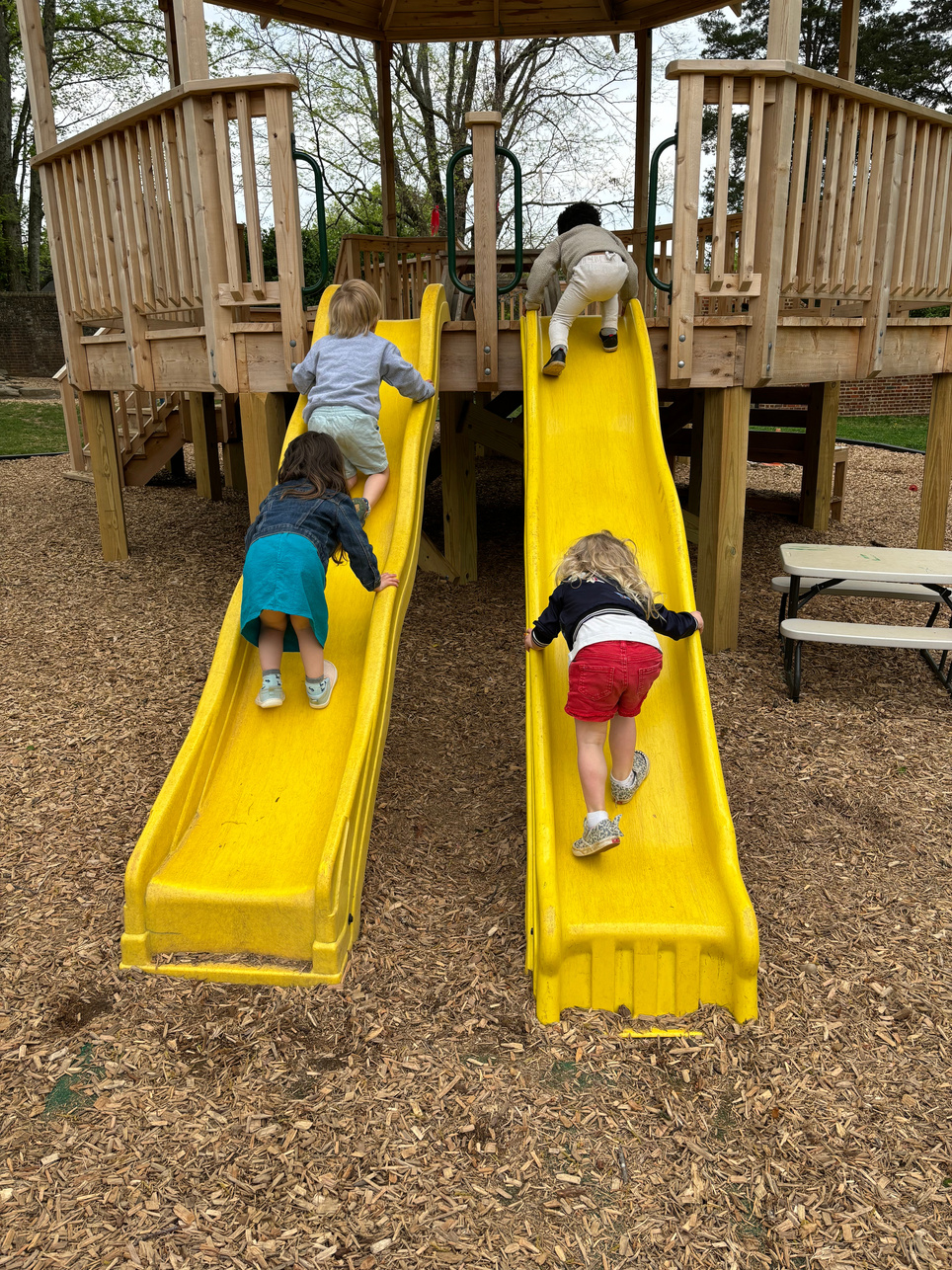
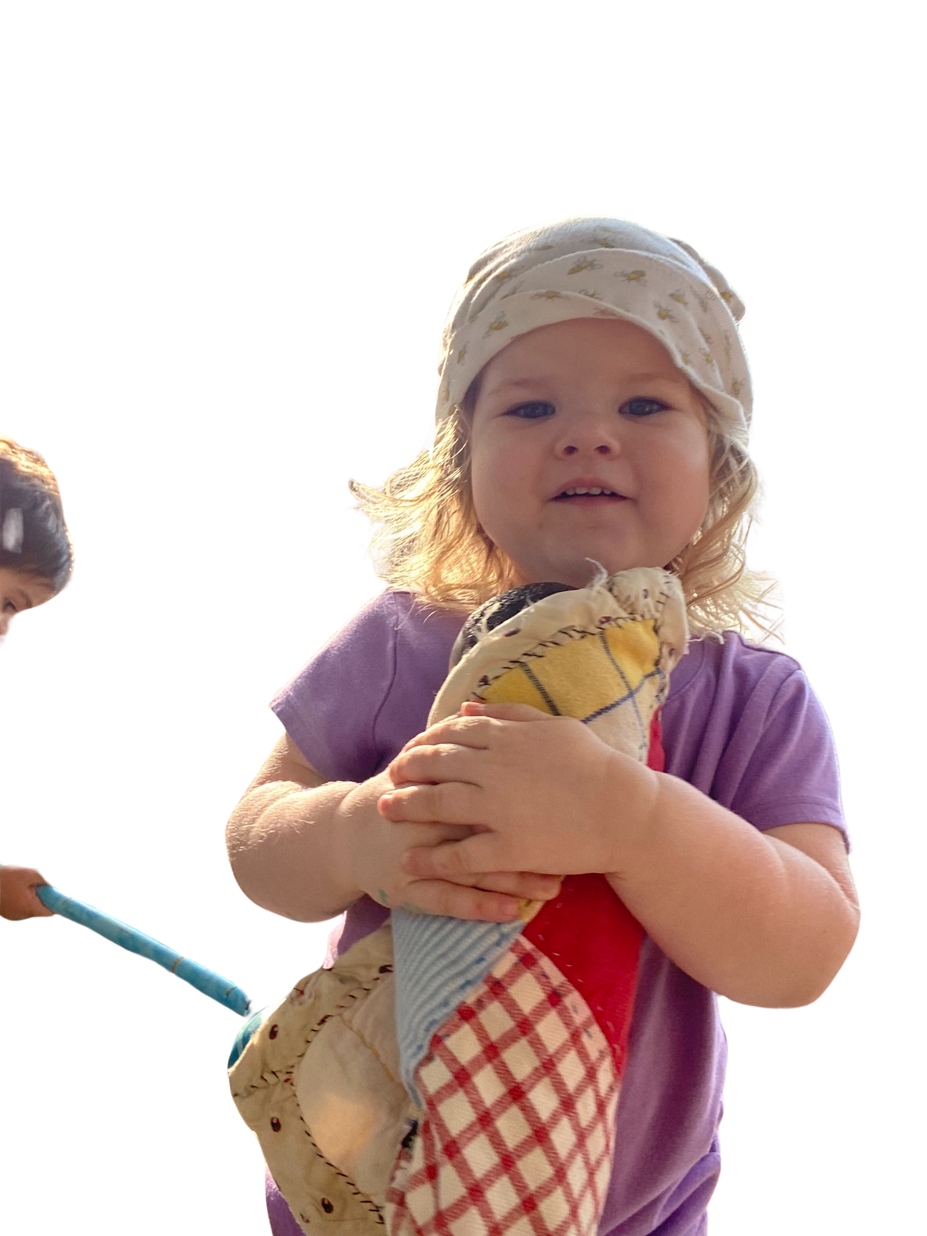
dramatic play
dramatic play
Costumes, scarves, hats, glasses, face paint, play jewelry, rubber bands, mirrors, camera, projector, flashlights, blankets, pillows, mats, play food, play kitchen, play cleaning set, baby dolls, strollers, wagons, tote bags, toy animals, toy people, dollhouse
Recognizing play
Recognizing play

Give children cardboard boxes of various size and let them their imagination take off.
Benefits:
- Spatial awareness
- Empowerment
- Control
- Creativity
- Physical Play
- Recycle and reuse concept
Cardboard box Play
Cardboard box Play

“This is our house, I need to put our names on it so the other kids know we live here!”
Block play is an open ended activity that can be accomplished indoors or outside and include store bought or homemade/recycled materials.
Benefits:
Block Play
Block Play
- Spatial awareness
- Math Concept
- Fine Motor Skills
- Self-expression
- Persistence
- Vocabulary extension
- Role playing
“I want the car to fit in this garage here under the tunnel, can you move it to the side little bit?”
Sand play is a wonderful medium to use for messy sensory play. Having a large outdoor sand pit is great, but a small sand bin can also be used to gain the benefits of unstructured sand play.
Benefits:
Sand Play
Sand Play
- Problem solving’
- Sensory Integration
- Motor Skills
- Social Skills
- Language development
- Independence
- Cause and effect
“I am making soup for my family, it has dumplings in it.”
Moldable materials such as playdough and clay are versatile materials that offer countless hours of fun and exploration.
Benefits:
- Fine Motor Skills
- Calming
- Creativity
- Hand-eye coordination
- Problem solving
- Socialization (when in group setting)
Playdough/Clay
Playdough/Clay
“I made an octopus, it has hundred eyes to see underwater!”
Process art focuses on the creative process rather than the final product or outcome. It emphasizes exploration, experimentation, and self-expression, allowing kids to freely engage with art materials without producing something specific. In process art, the journey of creating is more important than the destination, and there is no right or wrong way to do it.
Benefits:
- Fine Motor Skills
- Creativity
- Focus and Concentration
- Sensory Exploration
- Problem Solving
- Critical Thinking
“I love rainbows.”
Process Art
Process Art

Benefits of Play
Benefits of Play

- Children learn sharing, collaboration, and adherence to play rules.
- Play encourages SEL learning helping children learn to manage emotions, set and achieve positive goals, show empathy, and establish and maintain positive relationships.
- Play helps children handle stress and conflict.
- Play encourages children to practice conflict resolution. Through play, children learn to persist, interact, engage, invent, and act out their ideas and share them.
- Play affords children the opportunity to practice problem-solving.
- Children build relationships and connections with others and these interactions help children build a sense of self.
- Learning through play can involve a range of emotions, including feelings of enjoyment, satisfaction, and ownership, as well as frustration and anger.
- Children develop creative thinking skills when they explore and problem-solve during play.
- Play teaches social norms.
- Children begin to recognize emotions in others
- Play strengthens children's resilience and coping skills.
- Play builds confidence and independence.
- Improves children’s ability to understand things and solve simple problems.
- When children participate in play and have opportunities to become fully involved in what they are doing, they develop more sophisticated and complex ways of thinking.
- Through play with objects such as blocks, sand, balls, crayons, and paper children begin to understand logical scientific thinking, such as the concept of cause and effect.
- According to Piaget’s theory play has the best effect on cognitive development in young children.
- Play engages children in activities that promote cognitive development such as problem-solving, collaboration, mental flexibility, and creativity.
- Play can also remove barriers to cognitive development such as fear, anxiety or stress.

- Negotiation
- Social-emotional skills
- Cognitive development
- Enhances language and literacy skills
- Conflict resolution
- Cooperation
- Empathy
- Build confidence and independence
- Learning social norms
- Risk-taking
- Promotes critical thinking
- Stimulates imaginative and creative thinking

- Coordination, balance, gross motor skills, fine motor skills, dexterity, imagination
- Promotes better sleeping and eating habits.
- Promotes a more active lifestyle in adulthood.
- Contributes to healthy brain development.
- Develop competencies that lead to enhanced confidence and resiliency.
- Combats the obesity epidemic by avoiding a sedentary lifestyle (that can lead to diabetes, heart disease, etc.)
- Coordination, balance, gross motor skills, fine motor skills, dexterity, imagination
- Promotes better sleeping and eating habits.
- Promotes a more active lifestyle in adulthood.
- Coordination, balance, gross motor skills, fine motor skills, dexterity, imagination.
- Promotes better sleeping and eating habits.
- Contributes to healthy brain development.
- Develop competencies that lead to enhanced confidence and resiliency.
- Combats the obesity epidemic by avoiding a sedentary lifestyle (that can lead to diabetes, heart disease, etc.)

“Sometimes when you play you have to compromise.”- Christian age 7
“And sometimes you argue until it’s time to go back inside.” - Jace age 8

“I think it means have fun! Have fun! It is important to me.” -Renos, age 3

"Play makes me feel like I can just keep going and going and going." - PJ age 5

Website and it’s contents created by Graduate Teachers in the Boulder Journey School Teacher Education Program, Krista Polo, Christina Massey, Venuse Yeates, and Keri Sackey